
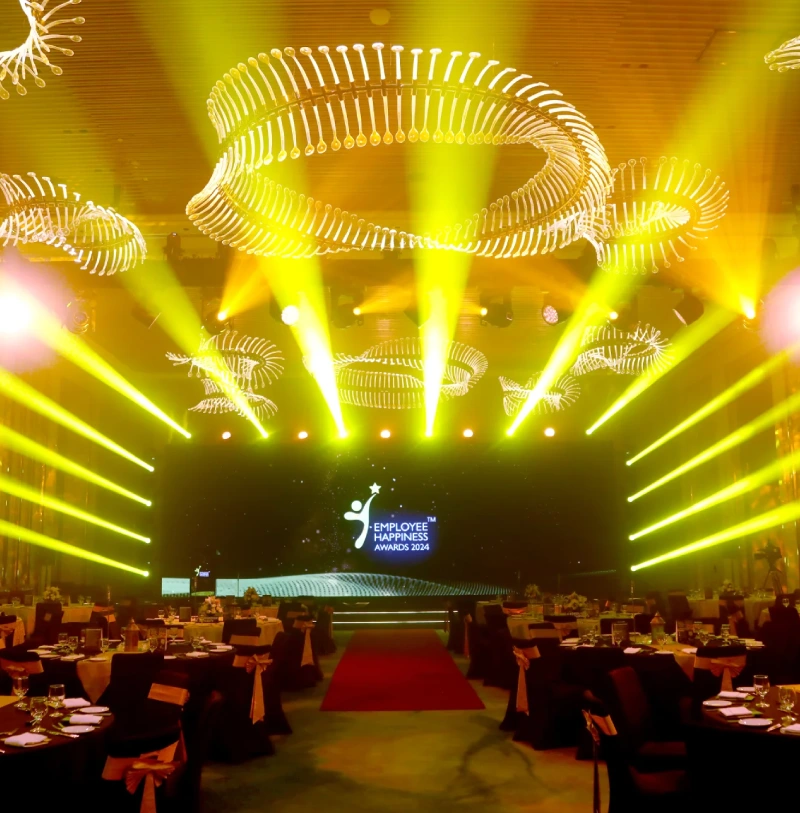
Truss & Stage Lighting Rental in Dubai: Types, Setup & Planning Guide
By Pulkit Narula | Published: October 7 , 2026
Planning an event in Dubai involves more than choosing a stage and adding a few lights.
Truss, stage lighting, LED screens, sound, cameras, branding and other AV elements often need to work together as one production system. The right setup depends on the venue, stage dimensions, equipment requirements, audience sightlines and the purpose of the event.
For conferences, product launches, exhibitions, award ceremonies, gala dinners and live events, the right truss rental in Dubai should be selected as part of the wider event production plan.
The same applies to stage lighting rental in Dubai. A corporate conference may require consistent presenter lighting and camera-friendly illumination, while a product launch may need product lighting, branded colour effects and programmed fixtures.
There is no universal truss or lighting configuration for every event. The practical approach is to define the venue, stage, equipment and event programme first, then build the technical plan around those requirements.
Quick Answer: What Should You Check Before Renting Truss and Stage Lighting?
Before booking a truss or stage lighting supplier in Dubai, confirm:
- Event date and venue
- Indoor or outdoor location
- Stage width, depth and height
- LED wall or screen dimensions
- Required lighting positions
- Fixture types and quantities
- Audience and camera sightlines
- Equipment loads
- Rigging or suspension requirements
- Power and distribution requirements
- Installation and dismantling windows
- Technical crew requirements
- Branding and fabrication requirements
- Venue-specific technical procedures
A detailed production brief gives suppliers the information they need to develop a suitable setup and prepare a clearer quotation.
Why Truss and Stage Lighting Should Be Planned Together
Truss provides a structural framework or mounting positions for lighting, branding, signage and other event-production elements.
Lighting determines how presenters, performers, products and branded environments appear to the audience and on camera.
These decisions are closely connected.
For example, a corporate conference may have a central stage, LED wall, sponsor branding, presenter positions and camera positions. The stage dimensions influence where truss can be placed. Those positions influence lighting angles, which can affect presenter visibility, screen reflections, camera exposure and audience sightlines.
The technical plan should therefore be developed around the complete production rather than selecting individual pieces of equipment at the last minute.
What Is Event Truss?
Event truss is a modular structural framework used in event production to create support or mounting positions for lighting, signage, branding and other production elements.
Common configurations include:
| Truss configuration | Typical application |
| Ground-supported truss | Stage lighting, branding and production structures |
| Goalpost or portal truss | Conference stages, presentations and smaller productions |
| Box or rectangular truss | Multiple lighting positions and larger productions |
| Exhibition truss | Booth lighting, branding and signage |
| Custom production structures | Bespoke stages, branded environments and special installations |
The appropriate configuration depends on the stage design, available space, intended equipment, structural requirements and venue rules.
A truss arrangement that looks suitable visually is not automatically suitable for a particular equipment load. Equipment weight, span, connection method and manufacturer specifications should be assessed by the appropriate technical professionals.
What Is Trussing?
In event production, trussing is commonly used to describe the use, arrangement or configuration of truss systems for a specific setup.
For example, a supplier may create a goalpost structure over a conference stage or a rectangular truss system containing several lighting positions.
Terminology can vary between suppliers and technical teams, so the most important thing is to communicate the actual structure, dimensions and intended use clearly.
What Is Rigging?
Rigging refers to the systems and methods used to suspend or support event-production equipment and structures.
Depending on the event, this can involve:
- Lighting
- Truss
- Branding and signage
- Scenic elements
- Production equipment
Suspended installations require consideration of structural loads, approved attachment points, suitable hardware and venue procedures.
Venue rules can also determine which rigging methods, contractors or approval processes are permitted. Event organisers should confirm these requirements with the venue before finalising a suspended production design.
Truss vs Trussing vs Rigging vs Stage Lighting
| Term | What it means | Typical use |
| Truss | Modular structural framework used in event production | Lighting, branding, signage and production structures |
| Trussing | Use and arrangement of truss systems for a specific setup | Stage and exhibition layouts |
| Rigging | Systems and methods used to suspend or support equipment and structures | Overhead lighting, truss, signage and scenic elements |
| Stage lighting | Fixtures and control systems used to illuminate an event | Presentations, performances, branding and atmosphere |
Common Truss Configurations for Events in Dubai
Ground-Supported Truss
Ground-supported truss uses floor-based vertical supports rather than relying on overhead suspension.
It can be suitable for stage lighting, branding and production structures where the venue and available floor area allow a floor-supported solution.
Before selecting this configuration, review:
- Stage dimensions
- Available floor space
- Audience movement
- Equipment loads
- Access routes
- Structure placement
- Sightlines
Goalpost or Portal Truss
A goalpost configuration normally consists of two vertical supports connected by an overhead horizontal section.
It can create a defined lighting or branding frame over a stage and may be suitable for conferences, presentations and smaller production environments.
The height and span should be designed around the stage, screen, lighting positions and sightlines rather than selected simply from a standard package.
Box or Rectangular Truss
A rectangular truss structure can provide multiple production positions around a stage.
It may be considered for larger productions requiring wider or multi-directional lighting coverage. The final structure should be assessed against the intended equipment loads, span, available space and applicable structural requirements.
Exhibition Truss
Truss can also be incorporated into exhibition environments for lighting, signage and branded elements.
For an exhibition setup, confirm:
- Stand dimensions
- Hall height restrictions
- Access rules
- Venue rigging policies
- Equipment loads
- Installation times
- Required technical documentation
Venue procedures can determine whether a proposed suspended or structural solution is permitted.
Custom Truss and Production Structures
Some events require a structure designed around a specific stage, brand identity or production concept.
Custom structures may involve fabrication, engineering review, additional installation work and closer coordination between creative and technical teams.
For events requiring custom stage elements, branded walls or metal light structures, explore Plan3Media’s fabrication and production services.
Common Stage Lighting Fixtures and Their Uses
The right stage lighting rental in Dubai depends on the event programme and visual objective, not simply on the number of fixtures.
LED PAR and Wash Lights
Wash fixtures provide broad illumination across stages, backdrops and selected areas.
They are useful when the priority is consistent coverage rather than highly directional lighting.
Moving Head Fixtures
Moving heads provide movement, colour changes and programmed effects.
They can be useful for product launches, award ceremonies, entertainment programmes and visually driven productions.
Profile Fixtures
Profile fixtures provide controlled, directional illumination.
They can be used to highlight presenters, performers, products or defined areas of the stage.
Followspots
Followspots can be used when a presenter or performer moves across a larger performance area and needs to remain visually highlighted.
Uplighting
Uplighting can add colour and visual depth to walls, architectural features and stage elements.
It is often used to support the atmosphere of gala dinners, receptions, launches and branded environments.
Front Lighting
Front lighting is particularly important for conferences and filmed events because presenters need consistent facial illumination.
Camera positions should be considered during lighting design rather than after the lighting package has already been selected.
Decorative Lighting
Decorative lighting supports the atmosphere of gala dinners, receptions, launches and other experience-led events.
The final lighting plan should balance audience visibility, camera requirements, LED screens, branding and the event programme.
Stage Lighting Design: How Should the Lighting Layout Be Planned?
Choosing fixtures is only one part of event lighting design in Dubai. Their position, direction and purpose also matter.
A practical lighting plan should consider the following areas:
| Lighting area | Main purpose |
| Front light | Clear illumination of presenters and speakers |
| Stage wash | Consistent coverage across the stage |
| Backlight | Separation between people and the background |
| Side light | Additional depth and definition |
| Product light | Controlled illumination for launches and displays |
| Decorative or ambient light | Atmosphere and environmental impact |
| Effect lighting | Entrances, transitions, performances and programmed moments |
For conferences, front and stage wash lighting are usually important for clear presenter visibility.
For product launches, product illumination and controlled effects may become more important.
For award ceremonies and live events, the lighting design may need to support entrances, transitions, stage moments and programmed cues.
The lighting plan should also account for LED walls and presentation screens. Poor fixture positioning can create unwanted reflections, reduce screen visibility or interfere with cameras.
Which Truss and Lighting Setup Is Suitable for Different Events?
| Event type | Typical truss application | Main lighting objective |
| Corporate conference | Stage or lighting truss | Presenter and stage visibility |
| Product launch | Stage and branding structure | Product, presenter and brand presentation |
| Award ceremony | Stage truss | Presenter, winner and stage visibility |
| Gala dinner | Selective production structures | Atmosphere and architectural enhancement |
| Exhibition | Booth or exhibition truss | Product and branding visibility |
| Trade show | Exhibition structures | Display illumination |
| Live entertainment | Production truss | Dynamic programmed lighting |
| Brand activation | Custom structures | Brand visibility and visual presentation |
The equipment should follow the event programme and venue conditions, not the other way around.
How to Choose the Right Truss Rental in Dubai
1. Start With the Venue
Before selecting equipment, confirm the venue’s dimensions, ceiling height, access arrangements, floor conditions and technical procedures.
This is particularly important where suspended equipment or larger structures are involved.
2. Confirm Stage Dimensions
Establish the stage width, depth and height, along with the available space around the stage.
These measurements influence the truss configuration and lighting coverage.
3. Identify the Equipment
Prepare a preliminary list of:
- Lighting fixtures
- LED screens
- Signage
- Branding
- Cameras
- Scenic elements
- Other production equipment
This allows structural and technical requirements to be assessed together.
4. Review Equipment Loads
Any structure carrying equipment should be assessed against the intended loads, configuration and applicable technical requirements.
Do not assume that a visually suitable truss arrangement is structurally suitable.
5. Consider Cameras and Streaming
Camera positions should be established before finalising truss and lighting locations.
A structure or fixture that looks acceptable from the audience can still obstruct a camera angle or create an unwanted visual obstruction.
6. Review Audience Sightlines
Check views from important seating areas, VIP positions, entrances and camera locations.
Truss, lighting fixtures, branding and screens should not unnecessarily interfere with these views.
7. Confirm Installation and Dismantling Windows
Allow time for:
- Load-in
- Assembly
- Lighting focus
- Programming
- AV testing
- Rehearsal
- Event operation
- Dismantling
The available installation window can influence the final production approach.
8. Determine Rigging Requirements
If equipment will be suspended, confirm the venue’s approval process and technical requirements before the design is finalised.
9. Check Power Requirements
Confirm power availability, distribution, connection requirements and the expected equipment load.
10. Coordinate Branding and Scenic Elements
Truss should work with the overall event environment.
Where the design includes branded walls, stage backdrops, custom structures or other fabrication, these elements should be coordinated with the technical production plan.
How to Choose Stage Lighting for an Event
Corporate Conferences
Prioritise consistent presenter lighting, stage visibility and camera-friendly illumination.
Product Launches
Product launches may require presenter lighting, product illumination, brand-focused colour and programmed effects.
Award Ceremonies
Lighting may need to cover presenter positions, award moments, winner entrances, the main stage and photography areas.
Gala Dinners
Decorative and architectural lighting may have a larger role when ambience is central to the event experience.
Live Events
Entertainment productions may require moving fixtures, programmed effects and more complex lighting control.
The largest lighting package is not necessarily the most appropriate one. The goal is to achieve the required visual result while keeping equipment, technical support and venue requirements aligned.
What Information Should You Give a Truss or Lighting Supplier?
A supplier can prepare a more accurate quotation when the brief includes:
- Event date
- Venue name
- Indoor or outdoor location
- Stage dimensions
- Expected audience size
- LED wall or screen dimensions
- Lighting requirements
- Rigging requirements
- Event programme
- Camera positions
- Installation access time
- Dismantling window
- Technical crew requirements
- Branding or fabrication requirements
The more complete the brief, the less likely it is that important production requirements will appear later as additional costs.
For wider AV requirements, explore Plan3Media’s AV rental services in Dubai, which cover event-production requirements including lighting, truss and related technical support.
How Venue Requirements Can Change the Setup
Venue conditions can significantly affect the technical plan.
A production company may have the required equipment available, but that does not automatically mean a particular installation method is permitted at the venue.
Before finalising a design, confirm:
- Ceiling height
- Approved rigging points
- Floor-loading restrictions
- Access routes
- Loading and unloading procedures
- Installation timings
- Power availability
- Technical documentation
- Venue-appointed technical services
These requirements should be established before the final production setup is approved.
For example, Dubai World Trade Centre has specific rigging procedures and venue-appointed rigging arrangements, so organisers using the venue should review its official requirements before finalising suspended production elements.
Outdoor Truss and Lighting: What Changes?
Outdoor events require additional planning because structures and equipment are exposed to environmental conditions.
Planning may need to address:
- Wind loading
- Ground conditions
- Anchoring or ballast
- Weather exposure
- Heat
- Equipment protection
- Power distribution
- Cable management
- Structural stability
- Installation and dismantling logistics
Outdoor structures should not simply be treated as indoor setups moved outside.
For outdoor truss, roof systems or other temporary structures, the configuration, anchoring or ballast, wind conditions and applicable technical requirements should be assessed by the appropriate qualified professionals.
How Truss, Lighting, AV and Fabrication Work Together
A practical production workflow is:
Event concept → Venue assessment → Stage design → Truss and lighting plan → AV integration → Branding and fabrication → Installation → Testing → Event execution
For example:
LED wall size can influence stage dimensions.
Stage dimensions can influence truss placement.
Truss placement can influence lighting angles.
Lighting angles can influence presenter visibility and camera exposure.
Branding and fabrication can then be integrated around the resulting production structure.
This integrated approach is particularly useful when an event requires staging, LED screens, sound, lighting, branding and custom fabrication.
Plan3Media’s fabrication and production services include stage backdrops, customised elements, branded walls and metal light structures.
A Practical Planning Timeline
There is no universal lead time for every event. The appropriate schedule depends on venue procedures, production scale, custom fabrication, technical documentation and the number of suppliers involved.
Several Weeks Before the Event
- Confirm the venue
- Collect venue technical information
- Define stage and screen requirements
- Establish the preliminary lighting concept
- Identify truss and rigging requirements
- Discuss supplier availability
- Identify branding and fabrication requirements
1–3 Weeks Before
- Confirm the equipment package
- Finalise production layouts
- Confirm branding assets
- Coordinate AV requirements
- Confirm installation access
- Resolve venue-specific technical arrangements
- Confirm technical crew
Final Week
- Finalise the event programme
- Confirm lighting cues
- Reconfirm access timings
- Review supplier responsibilities
- Complete final technical checks
- Confirm any changes to the production plan
Event Day
- Load-in
- Truss and equipment installation
- Lighting focus and programming
- AV testing
- Production walkthrough
- Event execution
- Dismantling
Larger productions may need substantially more preparation, particularly where custom fabrication, multiple suppliers, complex rigging or venue approvals are involved.
8 Questions to Ask Before Booking a Truss and Lighting Supplier
Before approving a quotation, ask:
1. Is installation included?
Clarify whether setup crew and installation time are included in the quoted scope.
2. Is dismantling included?
Confirm whether removal is included or treated as a separate service.
3. Who handles venue coordination?
Confirm who is responsible for communicating with the venue about technical requirements and approvals.
4. Are the equipment specifications listed?
The quotation should identify the actual truss configuration and lighting fixture types and quantities.
5. Are technicians included?
Confirm whether lighting technicians, operators or production support are included.
6. Are transport and logistics included?
Delivery and collection can affect the overall production scope.
7. Are technical drawings or documents required?
Complex structures or venue-specific installations may require technical documentation.
8. What happens if the production scope changes?
Clarify how additional equipment, extra hours or schedule changes will be handled.
Common Mistakes to Avoid
Choosing Equipment Before Checking the Venue
Venue restrictions can influence the technical setup, so venue information should be available before equipment is finalised.
Treating Lighting as an Afterthought
Lighting should be considered alongside the stage, screens, branding and camera requirements.
Ignoring Camera Positions
Events that are photographed, recorded or streamed need lighting and truss arrangements that work for cameras as well as the live audience.
Underestimating Setup Time
Installation, focusing, programming and testing all require time.
Comparing Suppliers Only on Rental Price
A lower equipment price may not include transport, installation, technicians, programming or other production services.
Making Last-Minute Structural Changes
Changes to truss, rigging or suspended equipment can affect technical planning, documentation, schedule and venue approval. Significant structural changes should be assessed by the appropriate qualified professionals.
What Should You Look for in a Truss and Lighting Rental Company in Dubai?
Technical Planning
Can the supplier understand your stage, venue, screen, lighting and camera requirements?
Venue Coordination
Can they work within the venue’s access, rigging and technical procedures?
Equipment Clarity
Does the quotation identify the fixture types, quantities and truss configuration?
Installation and Dismantling
Are setup and removal included, and how much access time is required?
Technical Crew
Does the quotation include lighting technicians, operators or production support?
Documentation
For more complex installations, can the supplier provide the technical information or drawings required by the venue?
Integrated Production Support
If the event also requires staging, LED screens, sound, branding or fabrication, can these components be coordinated within one production plan?
Plan3Media’s corporate event services in Dubai cover conferences, award nights, gala dinners, product launches and exhibitions.
Plan3Media’s Event Production Experience
Plan3Media’s published portfolio features projects including 399 Hills Park, Berkeley 40 Years Celebration, Nakheel Service Excellence Awards 2023 and World Realty Congress 2024.
These examples represent different event formats, but individual technical configurations should always be designed around the requirements of the specific event rather than copied from another production.
You can view Plan3Media’s published event portfolio to explore its event work.
Frequently Asked Questions
What is truss used for in events?
Truss is commonly used to create production structures and mounting positions for lighting, branding, signage and other event elements. The appropriate configuration depends on the venue, equipment and production requirements.
What is the difference between truss and trussing?
Truss refers to the physical structural framework, while trussing is commonly used to describe the use, arrangement or configuration of truss systems for a particular setup.
What is rigging in event production?
Rigging refers to the systems and methods used to suspend or support event-production equipment and structures. Suspended systems should be planned and installed according to qualified technical requirements and venue procedures.
How much does truss rental cost in Dubai?
Rental pricing varies according to the truss configuration, dimensions, equipment requirements, installation, rigging, transport, crew and venue conditions. The most useful way to compare quotations is to review the complete production scope rather than rely on a generic figure.
How much does stage lighting rental cost in Dubai?
Stage lighting requirements vary according to fixture types, quantities, control equipment, technical crew, programming, installation time and event complexity. An itemised quotation based on the actual venue and programme is more useful than a generic price.
What type of stage lighting is suitable for a corporate event?
Corporate events commonly require consistent presenter and stage illumination. Depending on the programme, wash fixtures, profile fixtures, decorative lighting or selected moving fixtures may also be appropriate.
Do I need trussing for an event stage?
Not necessarily. The need depends on the stage design, lighting requirements, production equipment, venue infrastructure and whether a floor-supported or suspended solution is permitted.
Can truss support lighting and LED screens?
A suitably engineered truss or support structure may be used for lighting, LED screens and other production equipment, but the suitability of the configuration and its loads must be assessed against equipment specifications, structural requirements and venue procedures.
What should I check before renting truss in Dubai?
Check the venue, stage dimensions, ceiling height, access, rigging procedures, equipment requirements, power, screen layout, sightlines and installation window before finalising the rental setup.
How early should I book truss and lighting?
Lead time depends on the event’s complexity. Productions involving custom structures, several suppliers, technical documentation or venue approvals generally require more preparation than straightforward setups.
What should be included in a truss and stage lighting rental package?
Depending on the supplier, a package may include truss, lighting fixtures, control equipment, installation, dismantling and technical crew. Always confirm whether transport, venue coordination, rigging, programming and event-day support are included.
Conclusion
Truss and stage lighting rental in Dubai should be planned as part of the wider event-production design rather than as isolated equipment rentals.
Start with the venue and event format. Then define the stage, screens, branding, audience and camera requirements before selecting the truss, lighting and supporting AV equipment.
When comparing suppliers, look beyond the equipment list. Review the complete scope, including installation, dismantling, technical crew, transport, power, venue requirements and technical documentation where applicable.
For wider production requirements, explore Plan3Media’s AV rental services in Dubai, corporate event services and fabrication and production services.
Planning an event in Dubai? Share your venue, event date, stage dimensions and technical requirements with Plan3Media to discuss a suitable truss, stage lighting and AV production setup.
