
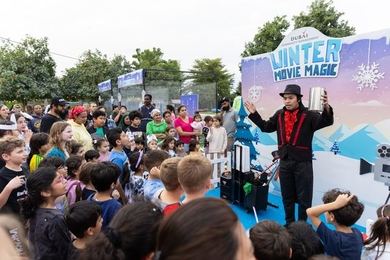
Family Fun Days in Dubai: How Community Managers Can Plan One That Residents Actually Show Up For
By Pulkit Narula | Published: September 22, 2026
A family fun day can be fully organised and still feel strangely empty.
The activities are booked. The entertainment is ready. Food has been arranged. The event space looks good. The invitations have gone out.
Yet only a fraction of the community turns up.
The usual response is to add more entertainment next time: more inflatables, more performers, more giveaways or more food stations.
But that assumes the event itself was the problem.
Often, the issue starts earlier. Residents may not see a clear reason to attend. The timing may not fit their routines. The communication may be too generic. The event may also require more effort than its perceived value justifies.
For community managers planning Family Fun Days in Dubai, the more useful shift is from event programming to attendance planning.
Dubai’s Quality of Life Strategy 2033 places emphasis on culture and entertainment, society and family, social cohesion and cultural diversity. It targets all community segments and specifically includes children, youth, seniors and people of determination among its demographic categories. The strategy also says Dubai and the UAE are home to over 200 nationalities and includes more than 1,000 annual sports, community, cultural, arts and entertainment events.
There is also a useful residential example. Dubai Residential reported that it hosted more than 85 curated events and activities across more than 20 communities in 2024, attracting more than 50,000 participants. It said tenant feedback was used to help shape its event calendar for different interests and age groups. These are company-reported figures and should therefore be treated as an operational example, not an independent industry benchmark.
That leads to a better starting question:
Do not ask, “How do we make the event bigger?”
Ask, “What would make this community decide that the event is worth attending?”
What Is a Family Fun Day?
A Family Fun Day is a residential or community event designed to bring households together through recreation, social activities, entertainment, food and shared experiences.
The format sounds simple, but the audience is not.
A community manager may be planning for toddlers, school-age children, teenagers, parents, grandparents and residents attending without children.
An event built entirely around children’s entertainment can therefore create an unintended problem: adults may have little reason to participate or stay.
A stronger family event has several layers.
There is something to do, something to watch, something to eat, somewhere to sit, and a reason to interact with other residents.
Depending on the community, that might include:
- family games
- sports activities
- arts and crafts
- children’s workshops
- food areas
- markets
- cultural activities
- entertainment
- outdoor movies
- resident-led activities
The objective is not to include everything.
It is to select the combination that fits the community.
Plan3Media’s current Festive & Community Events service includes Family Fun Days, Pop Up Markets, Cultural Events, Street Markets, Movie Nights, Sporting Events, Art & Craft Fairs and Outdoor Concerts among its listed formats.
Why Family Fun Days Need More Than Entertainment
A long activity list does not automatically create a reason to attend.
Before deciding whether to come, residents may be thinking:
Is this relevant to my family?
Does the timing work?
Where exactly is it?
What can we actually do there?
Will there be somewhere comfortable to sit?
Do we need to register?
What happens when we arrive?
That makes attendance more than a programming issue.
It is also a question of relevance, convenience, communication and resident experience.
Dubai Residential’s reporting provides a useful local example because it says tenant feedback was used to curate its event calendar, including activities aimed at different interests and age groups.
The practical lesson is:
An event should have a clear reason for the resident to attend.
That reason could be spending time together close to home, meeting neighbours, giving children a structured activity, creating a seasonal tradition or providing a relaxed social setting.
Once that reason is clear, the programme becomes easier to build.
The Attendance Framework for Family Fun Days
A useful planning framework is based on five questions.
1. Relevance
Will residents immediately understand why the event is meant for them?
2. Convenience
Do the date, timing, location, access and registration process fit the community?
3. Clarity
Does the invitation explain what is happening, when and where it is happening, and what residents can actually do?
4. Participation
Can people join activities rather than simply watch them?
5. Follow-Through
Does the experience on site match what residents were promised?
You cannot guarantee attendance.
You can remove avoidable barriers.
9 Family Fun Day Formats for Different Resident Needs
The goal is not to create the longest programme.
It is to select a format that fits the community.
1. Parent-and-Child Challenge Day
Create activities that parents and children complete together.
Examples include family relays, collaborative crafts, scavenger-style challenges and team games.
Parents become part of the experience rather than simply supervising children.
2. Family Sports Circuit
Instead of one formal tournament, create several short participation stations.
Families can move between activities without committing to a full competition schedule.
This can suit communities where residents enjoy activity but may prefer flexible participation.
3. Family Market and Activity Day
Combine children’s activities with a small market, food area or resident marketplace.
This gives adults another reason to attend while children have their own activity zones.
Public listings for earlier Plan3Media Family Fun Day events at JBR and Remraam show this type of mix, including children’s activities, games, food, arts and crafts and resident socialising. These historical third-party listings document event formats, not attendance outcomes.
4. Community Discovery Day
Build the programme around discovery rather than a stage show.
Possible elements include creative workshops, simple science activities, making sessions, demonstrations and resident-led activities.
This can work particularly well for mixed-age communities.
5. Outdoor Movie and Pre-Show Activities
Use the movie as the main attraction and keep supporting activities focused.
A simple structure could be:
Arrival → family activity → food → movie
This makes the resident journey easy to understand.
6. Resident Talent or Maker Day
Give residents a role in the programme.
Children can display artwork. Teenagers can perform. Residents can demonstrate a skill or contribute an activity.
The event becomes partially community-created rather than entirely organiser-created.
7. Seasonal Evening Family Event
For warmer periods, consider an evening format with shorter activity periods.
Depending on the venue and conditions, consider shaded or covered areas, comfortable seating and clear activity zones.
The event date, location and expected conditions should determine the final setup.
8. Cultural Exchange Day
Dubai’s Quality of Life Strategy specifically highlights cultural diversity, social cohesion and diverse entertainment for residents of different ages, cultures and interests.
Community managers can reflect this through appropriate food, crafts, storytelling, music or interactive activities.
The focus should be genuine participation and inclusion rather than simply adding cultural performances to a programme.
9. Family Fitness Morning
A lighter morning event can combine movement, children’s activities and informal social time.
Possible elements include short fitness sessions, family relays, children’s movement activities and a relaxed refreshment area.
Match the Format to the Community
| Community situation | Possible format | Planning priority |
| Many young families | Parent-and-child challenge day | Short activities, seating and easy navigation |
| Mixed ages | Family market + activity day | Give adults and children separate reasons to stay |
| Active resident base | Family sports circuit | Flexible participation |
| Strong resident creativity | Talent or maker day | Resident-led programming |
| Outdoor evening audience | Movie + activities | Simple, time-bound programme |
| Diverse resident population | Cultural exchange day | Inclusive participation |
| Hot-weather period | Seasonal evening event | Comfort, shade and timing |
| Multiple communities | Modular family day | Repeatable structure with local adaptation |
| Limited event space | Activity circuit | Timed sessions and controlled movement |
| Low previous turnout | Small-format pilot | Test one clear concept before scaling |
The Most Important Planning Question: Why Would a Resident Come?
Before booking entertainment, complete this sentence:
“A resident should attend this event because…”
Avoid:
“There will be entertainment.”
That does not tell residents much.
A more useful proposition is:
“Families can spend two relaxed hours together, children can participate in several activities, parents have a comfortable social area, and residents can meet neighbours without leaving the community.”
That single statement can guide:
the programme
the poster
the WhatsApp message
the registration process
the site layout
the post-event survey
A clear proposition also makes it easier to identify activities that do not contribute to the event’s purpose.
How Community Managers Can Increase Resident Turnout
1. Review Previous Event Data
Start with the previous three to five events where usable data exists.
Review:
- registrations
- actual attendance
- no-shows
- peak arrival times
- activity participation
- resident feedback
- repeated complaints
- age-group participation, where available
Then use a short resident survey.
Three practical questions are enough:
Which activity would make you most likely to attend?
Which day and time works best for your household?
What usually prevents you from attending community events?
The last question may reveal more useful information than simply asking what residents like.
2. Segment the Audience Without Overcomplicating It
You do not need a complicated data platform to begin.
Consider:
young children
school-age children
teenagers
parents
older adults
Then ask:
Does the programme give the relevant groups a reason to participate or stay?
Not every group needs a separate activity.
The programme simply needs enough variety to serve the households you are trying to reach.
3. Create One Hero Attraction
Avoid a programme where every activity competes for attention.
Choose one anchor:
Family Adventure Challenge
Movie Under the Stars
Community Talent Showcase
Family Sports Circuit
Then build supporting activities around it.
The hero attraction should answer:
“Why should I come?”
4. Keep the Programme Moving
Long gaps can leave families wondering what happens next.
Use clear activity blocks, simple transitions and visible programme information.
Someone arriving midway through the event should still be able to understand:
where to go
what is happening
what starts next
what is drop-in
what requires registration
5. Remove Unnecessary Registration Friction
Registration should have a purpose.
It may be useful for limited-capacity workshops, activity slots, access control or capacity planning.
For an open drop-in event, an unnecessarily complicated registration process can create another barrier.
Ask:
What information do we actually need to manage this event?
Collect only what has a clear operational purpose.
Communication Strategy: Build Attendance Before Event Day
One announcement should not carry the entire attendance strategy.
Use a simple sequence.
Announcement: Give the Reason
Lead with the resident experience.
Family Fun Day is coming to your community this Saturday. Join family games, creative activities, food and live entertainment from 4 PM.
Reminder: Make the Programme Tangible
Name actual activities.
Instead of:
“Fun for the whole family.”
Use:
“Bring the kids for the family challenge zone, arts and crafts and outdoor games.”
Practical Reminder: Remove Uncertainty
Include:
time
location
access or parking information
registration details
what to bring
age or activity restrictions where relevant
Same-Day Message: Keep It Short
Use the essential details and one clear reason to attend.
On-Site Signage: Continue the Communication
Use clear directions for:
activities
food
seating
toilets
first aid
registration
exit
Design the Site Around Resident Flow
A strong programme can still feel disorganised if the physical layout works against it.
Map the expected journey:
Arrival → Orientation → Activity → Food → Seating/Social Area → Main Attraction → Exit
Then test the layout.
What happens when several families arrive at once?
Where does the queue form?
Where can parents sit?
How do children move between activity zones?
Where will food queues develop?
Can residents see the main attraction on arrival?
Can someone arriving late understand what is happening?
The objective is not to create the biggest possible event footprint.
It is to make the experience easy to navigate.
Plan3Media’s community-events service says its process includes initial consultation, regular communication, collaborative planning, personalised solutions, quality assurance and post-event feedback. That makes those areas useful points to consider when evaluating an event partner.
Plan Production and AV Around the Experience
Not every Family Fun Day requires a large stage or extensive technical setup.
Start with the experience and work backwards.
A smaller event may require only:
- microphones
- background music
- announcements
- basic activity support
A larger programme may need:
- stage audio
- lighting
- screens
- digital signage
- technical support
The planning rule is simple:
Use production and AV to improve the resident experience, not simply to make the event look bigger.
For service-specific production or AV requirements, Plan3Media has separate Fabrication & Production and AV Rental offerings linked from its event services.
Safety, Accessibility and Resident Comfort
Safety should be considered while the event is being designed, not only after the programme is finalised.
Review:
emergency access
first-aid arrangements
activity-zone boundaries
crowd movement
accessible routes
seating
toilet access
food information
age-appropriate activities
weather contingencies
Where children are involved, activities should be appropriate for the intended age groups and have suitable supervision arrangements.
Accessibility also extends to the overall experience.
Not every resident will want loud entertainment or continuous activity.
A more flexible layout can include:
active areas
creative areas
social areas
quiet or seating areas
This allows households to participate according to their own preferences.
For larger or more complex events, confirm the relevant venue, safety and operational requirements with the appropriate venue representatives, authorities and event professionals.
Understand Dubai’s Event Requirements
Dubai’s Department of Economy and Tourism currently states that organisers wishing to organise an entertainment, sport, charity, religious or business event need an event permit, and DET provides an e-Permit process for event organisers and venues.
The exact approvals required for a residential Family Fun Day depend on the event structure, venue and activities involved.
Before announcing the final programme, confirm:
venue requirements
applicable event permits
activity-specific approvals
setup restrictions
operational requirements
Do not assume that because a previous community event was approved, the next event will follow exactly the same process.
Dubai legislation also contains activity-specific rules. For example, Dubai’s sports-events framework requires a permit before organising a sports event, illustrating why the activity mix matters when determining approvals.
Use Resident Feedback as a Planning Loop
Feedback should not begin only after the event.
Before the event
Ask what residents want and what prevents attendance.
During the event
Observe which activities attract participation and which spaces remain underused.
After the event
Ask:
What did you enjoy most?
What should change next time?
Was the timing convenient?
Would you attend another event like this?
What prevented you from participating more?
The purpose is not to make every event bigger.
It is to make each event more informed by the previous one.
A Practical 8-Step Family Fun Day Planning Framework
Step 1: Define the Attendance Objective
Decide what you are trying to improve.
For example:
- household participation
- engagement among families with young children
- repeat attendance
- participation from new residents
- resident satisfaction
Step 2: Understand the Resident Mix
Use available data and feedback to identify the households and participation barriers that matter.
Step 3: Choose One Clear Event Proposition
Write one sentence explaining why residents should attend.
Step 4: Build a Balanced Programme
Select activities for the relevant audience groups without trying to fill every minute.
Step 5: Plan the Site
Map:
arrival → activities → food → seating → main attraction → exit
Identify queues, bottlenecks and supervision points.
Step 6: Confirm Production and Compliance
Decide what production and AV genuinely support the experience.
Confirm applicable permits and venue requirements before announcing the event.
Step 7: Build the Communication Sequence
Prepare:
announcement → reminder → practical information → same-day message
Step 8: Measure and Improve
Compare:
planned attendance → registrations → actual attendance → participation → no-shows → feedback → repeat interest
Suggested Family Fun Day Planning Timeline
This is an illustrative planning framework, not a universal Dubai requirement. Actual preparation time depends on community size, venue, programme complexity, supplier availability and applicable approvals.
| Time before event | Main activity |
| 8–10 weeks | Review previous data; survey residents; define objective |
| 6–8 weeks | Select concept, site, activity mix and suppliers |
| 4–6 weeks | Confirm entertainment, catering, production, AV and operational requirements |
| 3–4 weeks | Launch communication and registration where needed |
| 2 weeks | Review resident interest and refine messaging or activity allocation |
| 1 week | Confirm suppliers, staffing, signage, site flow, safety and contingency arrangements |
| Event day | Install, test, manage arrivals and monitor participation |
| 1–3 days after | Review attendance, no-shows and resident feedback |
| Within 1–2 weeks | Document lessons and update future programming |
The key checkpoint is not the number of weeks.
It is whether the team knows:
who the event is for
why residents should attend
how they will move through the space
what approvals are required
how attendance will be measured
What Plan3Media’s Public Work Shows
Plan3Media’s current Festive & Community Events page lists Family Fun Days alongside neighbourhood gatherings, seasonal celebrations, public-holiday events, markets, movie nights, sporting events and other community formats. Its own page states that the company has organised over 700 community events in locations including Arabian Ranches, Dubai Hills, Palm Jumeirah, Discovery Gardens, JVC and Meydan. This is a company claim and should not be treated as independently audited industry data.
Earlier public event listings also document Plan3Media-associated Family Fun Day events at JBR and Remraam, illustrating how family activities, food, games, arts and crafts and resident social interaction can be combined in a residential setting. Those listings are historical and are not evidence of attendance or performance results.
For a community manager, the more useful supplier questions are:
How do you gather resident insight?
How do you design the programme around the audience?
How do you manage resident flow?
What is included in the operational plan?
How do you handle safety and approvals?
How do you measure what worked after the event?
How to Measure Whether Residents Actually Showed Up
A headcount gives you only one number.
A better report separates awareness, attendance and engagement.
| Measure | What it tells you |
| Residents reached | How broadly the event was communicated |
| Registrations | Initial expressed interest |
| Actual attendance | How many residents came |
| Registration-to-attendance rate | How many registrants followed through |
| Household participation | How many households took part |
| Peak attendance | When the event was busiest |
| Activity participation | Which activities were actually used |
| Average dwell time | Whether residents stayed or left quickly |
| No-show reasons | Why interested residents did not attend |
| Resident satisfaction | How attendees evaluated the experience |
| Repeat-event interest | Whether residents want similar programming again |
| Cost per attendee | Useful for internal comparison of event formats |
The no-show data can be particularly useful.
Suppose 300 residents register but only 180 attend.
Do not automatically conclude that more promotion is needed.
Find out why the other 120 did not come.
Was the timing inconvenient?
Did plans change?
Was access difficult?
Was registration confusing?
Did residents misunderstand the programme?
Did the event feel less relevant than expected?
That information can improve the next event more meaningfully than simply adding another entertainment supplier.
Common Family Fun Day Mistakes to Avoid
1. Planning for Children Alone
A family event is not the same as a children’s party.
Fix: Create reasons for adults to participate, relax and socialise too.
2. Using a Generic Event Description
“Fun activities for the whole family” communicates very little.
Fix: Name specific activities and experiences.
3. Making Registration Complicated
Too much registration can create friction for a simple drop-in event.
Fix: Collect only information required for a genuine operational purpose.
4. Adding Too Many Activities
More activities can create confusion, queues and fragmented attention.
Fix: Choose one hero attraction and a manageable number of supporting activities.
5. Ignoring Resident Comfort
Not every household wants the same level of noise or activity.
Fix: Include active, social, creative and quieter areas where the venue allows.
6. Measuring Attendance Without Measuring Why People Did Not Come
An attendance number cannot explain itself.
Fix: Track no-shows and ask practical follow-up questions.
7. Treating Safety and Approvals as Last-Minute Tasks
Operational requirements can affect the programme itself.
Fix: Check venue, safety, accessibility and applicable permit requirements during planning.
Frequently Asked Questions
What makes a Family Fun Day successful in a residential community?
A strong Family Fun Day has a clear reason for residents to attend, a programme suited to the community, convenient access and communication that explains what people can expect. Attendance should be considered alongside participation, feedback and repeat interest.
How can community managers increase attendance at Family Fun Days in Dubai?
Start with previous attendance data and resident feedback. Identify barriers, choose a clear event proposition, communicate specific activities and make timing, access and registration straightforward.
What activities work well for Family Fun Days in Dubai?
Parent-child challenges, family sports, creative workshops, markets, outdoor movies, cultural activities, talent showcases and seasonal programmes can all be used. The right mix depends on the resident profile, venue, event objective and available space.
What is the best time for a Family Fun Day in Dubai?
There is no universal best time. Community routines, venue availability, event format, date and expected conditions should all influence the schedule. Outdoor events may also require additional consideration of shade, covered areas and weather contingencies.
Do Family Fun Days in Dubai require a permit?
Dubai DET states that organisers wishing to organise an entertainment, sport, charity, religious or business event need an event permit. The organiser should confirm which permits and approvals apply to the specific residential event, venue and activities before announcing the final programme.
Should a Family Fun Day be free for residents?
A free event can remove a price barrier, but it does not guarantee attendance. Relevance, timing, communication, access and resident interest can still influence participation.
Should community managers require registration?
Registration can help with capacity planning and limited-capacity activities. For open drop-in events, unnecessary registration steps can create friction. The process should match the operational requirement.
How should community managers measure Family Fun Day performance?
Track reach, registrations, actual attendance, household participation, activity usage, dwell time, satisfaction, repeat interest and no-show reasons. Looking across several events provides more useful planning information than a single headcount.
Conclusion
A Family Fun Day does not become more successful simply because more entertainment is added.
Residents need a clear reason to attend.
Start with the community rather than the entertainment list. Use resident feedback to shape the concept. Give relevant audience groups opportunities to participate. Make communication specific. Keep access and registration straightforward. Design the site around how families will actually move through it. Confirm safety, accessibility, venue requirements and applicable permits before the event is announced.
Then measure not only who attended, but also who registered and did not come, which activities were used, how long residents stayed and what they want next.
That turns a one-day activity into useful information for planning the next Family Fun Day in Dubai.
For Plan3Media’s community-event services, see Festive & Community Events and its Our Works portfolio.
